
Unseasonal rainfall could damage standing wheat crops, especially late-sown fields nearing maturity and grain-filling stages.

Monsoon rains have unleashed widespread destruction across India, claiming seven lives in Himachal Pradesh and Karnataka due to landslides and floods, while heavy downpours have disrupted normal life and triggered red alerts in Maharashtra and other regions.

Heavy rains and thunder returned to Mumbai, causing significant delays in local and long-distance train services, particularly affecting routes towards Gujarat and Pune. Two key reservoirs, Tulsi and Vihar lakes, have begun overflowing, though the city's overall water stock remains at 41.43 per cent.

S&P Global Ratings projects India's economic growth to slow to 6.6 per cent in FY27, down from 7.7 per cent in FY26, citing energy stress and a potential sub-par monsoon.

Water levels were even lower than the 10-year average in 27 reservoirs in eastern India and around 47 in southern India.
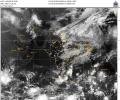
IMD Director General Mrutunjay Mohapatra said the department's modelling indicate formation of a cyclonic storm around May 9, but its movement and intensification may be determined after the low pressure area actually forms on May 7.

"Rather than worrying, preparation is required. Contingency plans will be made for affected districts and crop changes will be considered wherever necessary"

The red alert was issued for the second consecutive day. Rains have been lashing Mumbai and adjoining districts since Tuesday night.

The southwest monsoon has advanced across northern Indian states, leading to widespread rainfall, waterlogging, road blockages, and rain-related deaths, particularly in Himachal Pradesh and Rajasthan. The Centre is monitoring the situation, especially concerning potential drought conditions in some areas due to the El Nino effect.

Large parts of India are experiencing a severe heatwave, with temperatures soaring to dangerous levels. Authorities have issued alerts and health advisories as the heatwave intensifies across multiple states.

The India meteorological department on Monday issued an 'orange alert' for Mumbai and Thane signalling very heavy rainfall till June 21.

While there was a brief respite from the incessant downpour on Tuesday, collaborative efforts from the defence, national, and state disaster response forces took the lead in executing rescue and relief operations.

More than 39.8 lakh people in 27 of the 33 districts in the state were affected by the deluge on Thursday.

The Commission for Air Quality Management (CAQM) has implemented stage one measures in Delhi-NCR under the Graded Response Action Plan (GRAP) as air quality declined to the 'poor' category.
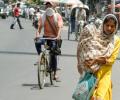
Uttar Pradesh is experiencing an intense heatwave, with Banda recording the highest temperature at 47.6 degrees Celsius. The IMD has issued a 'Red Colour Warning' for severe heatwave conditions. The extreme heat is disrupting daily life and economic activity, prompting government action to prevent heat-related illnesses.

Most north Indian states reported below-normal temperatures on Monday, with rain and thunderstorms lashing parts of Uttar Pradesh, Rajasthan, and Himachal Pradesh. The southwest monsoon is expected to arrive in Kerala in the next two to three days.

Brace for some warmth this winter as the India Meteorological Department (IMD) in its December-February forecast on Thursday said that the minimum and maximum temperatures could remain 'normal' to 'above normal' over most parts of Northwest and Northeast India. Both the minimum and maximum will remain below normal in Southern Peninsular and Central India in these winter months. While this could give some respite from the intense cold of North India, it could have a negative impact on the standing rabi crops if the temperature rise is unusual and abnormal.

'Can you believe there are over 26,500 deaths linked to heatwave-driven ozone in 2024?'

Heavy monsoon rains have severely impacted Mumbai and its surrounding areas, leading to landslides, suspension of train services, and at least 13 fatalities over the past few days. The Mumbai-Pune Expressway was also shut due to a concrete pillar collapse and waterlogging.

India's peak power demand reached an all-time high of 257.37 GW on Monday, driven by increased use of cooling appliances during an intense heatwave, according to power ministry data. The Indian Meteorological Department has forecast continued heatwave conditions in northwest and central India.
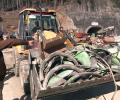
Manual horizontal digging will start soon in addition to the ongoing top-down drilling to rescue the 41 trapped workers in the Silkyara tunnel in Uttarkashi, the NDMA said on Monday.

Given IMD's past record on forecasts, the latest one could also go wrong.

The Brihanmumbai Municipal Corporation (BMC) has announced a 10 per cent water cut across Mumbai starting May 15, citing concerns over a below-normal monsoon forecast due to the El Nino weather pattern. The current water stock in the city's seven lakes is expected to last until July 6.

Researchers at IIT Bombay have discovered that heatwaves in the Indo-Gangetic Plains are primarily caused by local land and weather conditions, rather than hot air originating from elsewhere, emphasising the need for location-specific early warning systems.

Several parts of India are experiencing a severe heatwave, with temperatures soaring past 44 degrees Celsius. States are issuing alerts and taking measures to protect people and animals from the extreme conditions.

Kolkata Knight Riders face the threat of rain disrupting their IPL match against Punjab Kings, potentially impacting their chances of securing their first win of the season.

Delhi experiences a biting chill with 'cold day' conditions and dense fog, coupled with 'very poor' air quality. The IMD forecasts continued cold weather and potential light rain.

A poor monsoon could drag overall economic growth and compound the impact of the West Asia conflict on the Indian economy.

Incessant rains and water-logging slowed down traffic in Mumbai, with the IMD issuing a 'red alert', predicting very heavy showers in the city and neighbouring areas. Commuters faced water accumulation on tracks and delays in local train services.

The IMD has predicted "heavy to very heavy" rainfall in Mumbai on Sunday.

'We should expect extreme heat, extreme rains, floods, landslides and maybe cyclones. Not just this year, in the coming year as well.'

The mercury in Delhi, which recorded its hottest day of the year so far at 45.6 degrees Celsius on Sunday, came down to 42.4 degrees Celsius, according to the India meteorological department.

'Monsoon is the pran (life) of our water system.' 'A weak monsoon will have a very negative impact on crops and people's lives.'

The India Meteorological Department (IMD) forecasts the withdrawal of the southwest monsoon from northwest India around September 15. This year's monsoon covered the country earlier than usual, resulting in surplus rainfall and extreme weather events.

Schools in Delhi are taking precautionary measures to protect students from the ongoing heatwave, including suspending outdoor activities, shifting assemblies indoors, and considering early closure for junior classes.

IMD weather forecast predicted a moderate to intense spell of rain in these areas for the next three to four hours.

Retail sales of vehicles across categories in India in 2025 grew by 7.71 per cent at 2,81,61,228 units as compared to 2,61,45,445 in 2024, with GST 2.0 helping overcome a subdued start to the year, Federation of Automobile Dealers Associations said on Tuesday.

From a few rain gauges in 1875 to rivalling the world's best weather agencies, the India Meteorological Department (IMD) has weathered its way to becoming a global leader in forecasting.

Several states in north India, including Rajasthan and Himachal Pradesh, experienced varied weather conditions, including light to moderate rainfall, fog, and temperature fluctuations.

Above-normal cold wave days are expected in some areas of central India, eastern Uttar Pradesh and Bihar during January 2026.
